Ant Control Malaysia - Inspection & Ant Baiting Solutions
Persistent ant trails in your kitchen or store room usually mean a nest is hidden somewhere on the property. We find the source and work out a treatment plan that suits the layout and level of activity.
Why Ant Infestations Keep Returning
Ants are social insects that live in large colonies. The ants you see trailing across a countertop are workers searching for food and water. They leave a scent trail that guides others from the nest straight to the food source, which is why wiping them away rarely stops the flow for long.
In Malaysian homes and food premises, several small species are common indoors. Tiny pale ants that appear around sugar jars and fruit bowls are often what people call sugar ants or ghost ants. Outdoors, fire ants build mounds in garden soil and can deliver a painful sting if disturbed. Any of these species can move indoors when weather or food availability pushes them to explore.
A trail of ants in a wet kitchen, pantry, or food court stall signals that a colony has established itself nearby. Without finding and treating the nest, the cycle of scouts, trails, and returning workers continues. That is when property owners and business operators reach out to us for a more lasting solution.
Signs That Point to an Ant Nest Nearby
A few ants here and there may not mean much, but steady activity usually points to a nest on or near the property.
Visible trails along walls and edges
Worker ants follow skirting boards, door frames, and the edges of kitchen cabinets. A well-worn trail can show up as a moving line of ants at certain times of day.
Ants appearing around food and water
Small ants gathering around pet bowls, fruit baskets, unsealed food containers, or damp dishcloths suggest they have found a reliable food or moisture source nearby.
Fine soil or debris near skirting and tiles
Some species push out fine soil or debris when they nest inside wall cavities or under floor tiles. Small piles of grit along grout lines can be a clue.
Nesting activity in plant pots and garden beds
Disturbed soil in potted plants, planter boxes, or garden beds right next to the house often houses a colony. Ants moving in and out of the same spot throughout the day is a strong sign.
Recurring activity after cleaning
If ants reappear within hours of wiping down surfaces, the nest is likely inside the property rather than outdoors. The trail simply gets re-established.
- These signs can suggest an ant colony is present, but only a physical inspection can confirm where the nest is and how large the infestation has become. If you spot any of these signs, send us a WhatsApp message with a few photos and we can talk through what an assessment would involve.
What Our Ant Control Work Covers
Every job starts with understanding how the ants are moving through the property and where they are coming from.
- 1
Property walk-through
We trace trails back to entry points and likely nest sites. This includes checking wall-floor junctions, behind appliances, under sinks, and around door and window frames.
- 2
Nest location assessment
Depending on what the inspection finds, we look for nests inside wall voids, under tiles, in plant pots, or in damp areas such as behind washing machines and dishwashers.
- 3
Targeted baiting approach
Where suitable, we place bait stations or apply bait gel in cracks and crevices. Worker ants carry the bait back to the colony, which can reach the queen and the rest of the nest over time.
- 4
Access point advice
We point out gaps, cracks, and unsealed pipe entries that ants use to enter the building. Closing these helps reduce future movement indoors.
Preventing Ghost Ants and Fire Ants After Treatment
Ants need food, water, and a way in. Removing these three things makes your property far less inviting to them. Wipe down kitchen counters and dining tables at the end of each day, and sweep or mop floors to remove crumbs and sticky spills. Store sugar, biscuits, cereal, and pet food in containers with tight-fitting lids rather than leaving them in opened packaging.
Fix dripping taps and leaking pipes, especially under sinks and behind washing machines. Ants are drawn to moisture just as much as they are to food. In bathrooms and wet kitchens, keep floors and ledges as dry as practical. Empty drip trays under potted plants and avoid overwatering indoor plants, because damp soil can become a nesting site.
Seal gaps around pipe entries under sinks and behind toilets with a suitable filler. Check that door sweeps and window screens are in good condition, and repair cracked grout or loose tiles where ants might travel or nest. Small steps like these reduce the chance of a new colony moving in once the current one has been controlled.
Properties We Treat for Ant Infestation
Terrace and semi-detached homes
Ants often enter from garden soil, potted plants, or external wall cracks. Kitchens and ground-floor wet areas are common activity zones. We check both indoor rooms and the immediate outdoor perimeter.
Condominiums and apartments
Colonies can nest in planter boxes on balconies, inside bathroom false ceilings, or behind kitchen cabinetry. Shared walls and service risers sometimes allow ants to move between units.
Food courts, restaurants and kopitiam stalls
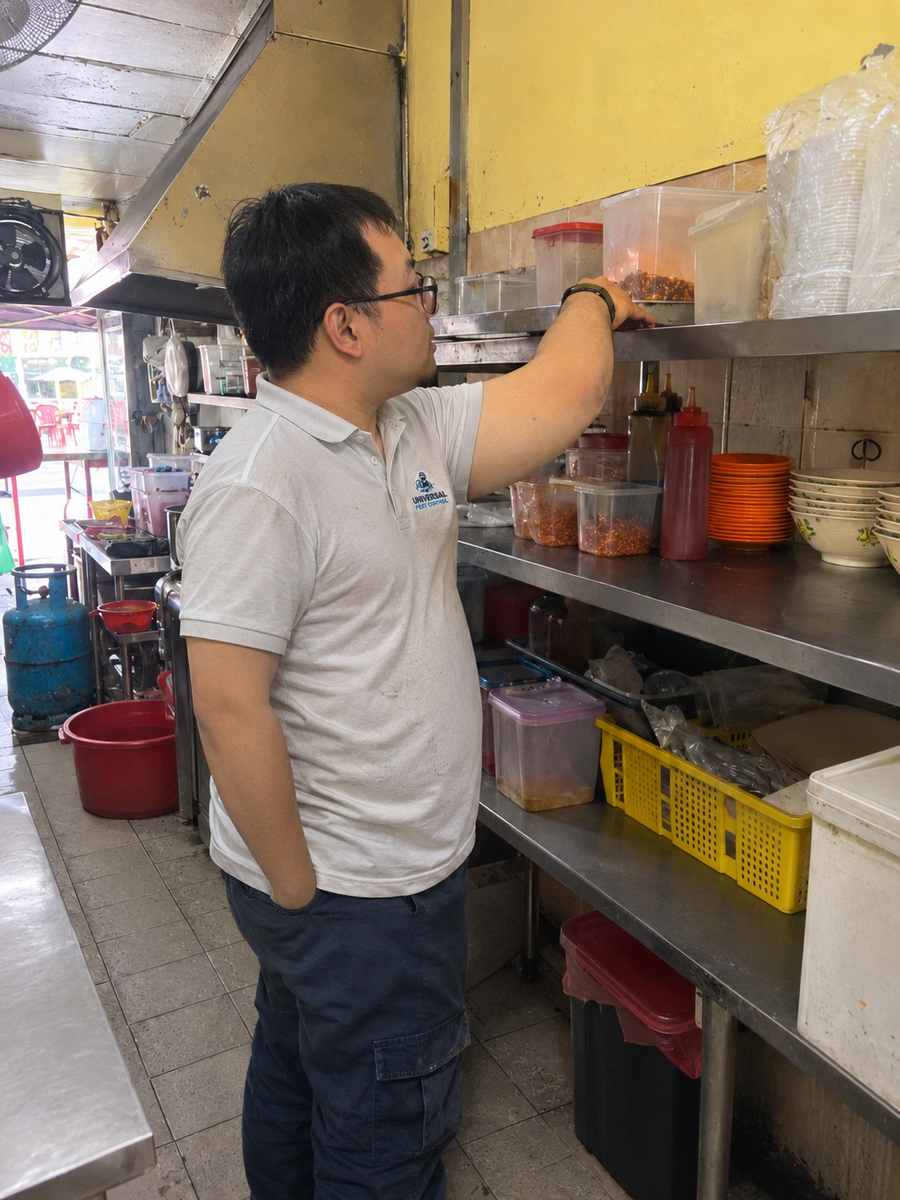
Food debris, grease, and moisture create ideal conditions. We focus on food prep areas, dry storage, bin zones, and cracks in tiled walls and floors where ants travel and nest.
Warehouses and dry goods storage
Spilled dry ingredients and cardboard packaging attract ants. We look for trails along racking legs, wall edges, and loading bays, and assess whether nests are indoors or in the surrounding grounds.
Our Ant Control and Baiting Process
- 1
Enquiry
You send us a WhatsApp message describing the ant activity, the type of property, and a few photos if available. We reply with questions to understand the situation before booking an assessment.
- 2
Assessment
We visit the property to trace trails, locate nests, and identify what is attracting the ants. The inspection covers indoor rooms, wet areas, and immediate outdoor spaces where relevant.
- 3
Quotation
Based on the size of the area, the number and location of nests, and the treatment approach needed, we provide a written quotation. The cost depends on the scope of work, not a fixed rate.
- 4
Treatment
We carry out the agreed work, which may include baiting, sealing guidance, and advice on removing food and water sources. The methods used depend on what the assessment uncovered.
- 5
Follow-up
We check how the ant activity has changed and whether any further attention is needed. For some properties, a single visit is enough; for others, a follow-up helps confirm the colony has been controlled.
The steps depend on the pest and the property. More on our process
What Affects the Quotation for Ant Control
The quotation is worked out after we assess the property. Several factors influence the scope of work and the final cost.
- Size of the property and number of rooms affected
- Number of nests found and how accessible they are
- Whether nests are indoors, outdoors, or in wall voids and under tiles
- Type of property – a landed home, a condominium unit, or a commercial food premises
- Level of ant activity and how widespread the trails are
- Whether follow-up visits are needed to monitor bait uptake
- Amount of preparation work required before treatment can begin
Safety During Ant Treatment
Before we begin any treatment, we walk through the property with you to identify areas that need special care, such as food preparation surfaces, pantries, pet feeding stations, and children's play areas. The approach we take keeps treatment materials in cracks, crevices, and bait stations rather than on open surfaces wherever possible.
We give you clear preparation instructions before the visit. These may include clearing countertops, storing open food in sealed containers, and keeping pets and children away from the treatment zones for a period we specify on the day. The exact instructions depend on the treatment method chosen after the assessment.
For food businesses, we pay close attention to food handling areas and dry storage. We work around your operating hours and advise on any steps needed to protect ingredients, utensils, and work surfaces before and after the visit. Our aim is to address the ant problem without disrupting your daily routines more than necessary.
Ant Control FAQs
Why do ants keep appearing even after I clean the kitchen?
Can you spray the ant trail to stop them?
How long does it take to get rid of an ant problem?
Are the treatments safe for my family and pets?
Do you treat ants in food businesses like cafes and restaurants?
What should I do before the treatment visit?
Ant Control Area Coverage
Kuala Lumpur
Related Pest Control Services
Get an Ant Control Quote on WhatsApp
WhatsApp us to get a free quote. We will take a look and come back to you with a quotation.