School Pest Control Malaysia - Schools, Kindergartens & Canteens
We work with school administrators and facility managers to keep learning spaces safe from pests. Our approach respects school schedules, parent concerns and the need for discretion.
Why School Pest Control Matters in Malaysia
Schools, kindergartens and tuition centres bring together large groups of children in spaces that often include canteens, food preparation areas, gardens and storerooms. Spilled food crumbs, stored books, timber fixtures and damp corners create conditions that several pests find attractive. Even a small pest issue can disrupt classes and worry parents.
Mosquitoes are a particular worry because of the risk of Aedes-borne diseases. Standing water in drains, potted plants, roof gutters or poorly maintained compound areas can become breeding sites. Rodents can move through false ceilings and kitchen ducting, contaminating food surfaces and leaving droppings. Termites may go unnoticed in door frames, skirting boards or old timber furniture until structural damage is already underway.
When parents or staff raise concerns, administrators need a practical response that addresses the problem without alarming the school community. We are often contacted after a teacher has spotted droppings, a parent has reported mosquito bites around the school, or maintenance staff have found damaged wood. Our role is to assess the situation calmly and recommend a course of action that fits the school's timetable and duty of care.
Signs Your School May Need Pest Management
Staff and caretakers may notice one or more of these signs before a pest issue becomes obvious.
Droppings in canteens or storerooms
Small dark droppings along skirting boards, inside cupboards or behind kitchen equipment can point to rodents. The size and shape help indicate the species.
Damaged timber in older blocks
Hollow-sounding skirting, blistered paint on door frames or mud tubes along walls may suggest termite activity. These signs are often found in ground-floor classrooms and administrative offices.
Mosquitoes in classrooms or compounds
Daytime mosquito sightings near drains, planter boxes or shaded corridors can mean breeding sites are close by. Aedes mosquitoes often rest in cool, dark areas inside buildings.
Greasy rub marks or gnawed materials
Dark smudges along walls, chewed packaging in canteen stores or gnawed wiring in ceiling voids are common rodent indicators. These marks build up along regular travel paths.
Unusual odours in enclosed spaces
A persistent musky smell in storerooms, under staircases or inside cabinets can come from rodent urine or a larger infestation. The odour often becomes stronger in humid weather.
Parent or staff complaints
Reports of bites, pest sightings or concerns about hygiene are often the first signal. We treat these reports seriously and can inspect the areas mentioned to confirm whether a pest is present.
- These signs can suggest a pest is present, but they do not confirm the species or the scale of the problem. A proper assessment is the only way to identify what is happening and where to focus treatment.
What Our School Pest Control Work Covers
Every school site is different, so the exact work depends on the inspection findings. Typically, our service may touch on several of the following areas.
- 1
Canteen and kitchen areas
We pay close attention to food preparation zones, dishwashing areas, grease traps and dry storage rooms. Rodents and cockroaches often gravitate to these spaces because of food residue and moisture.
- 2
Classroom and library inspections
We check bookshelves, cupboards, false ceilings and timber fixtures for termite damage, rodent droppings or insect activity. Early detection helps protect teaching materials and building fabric.
- 3
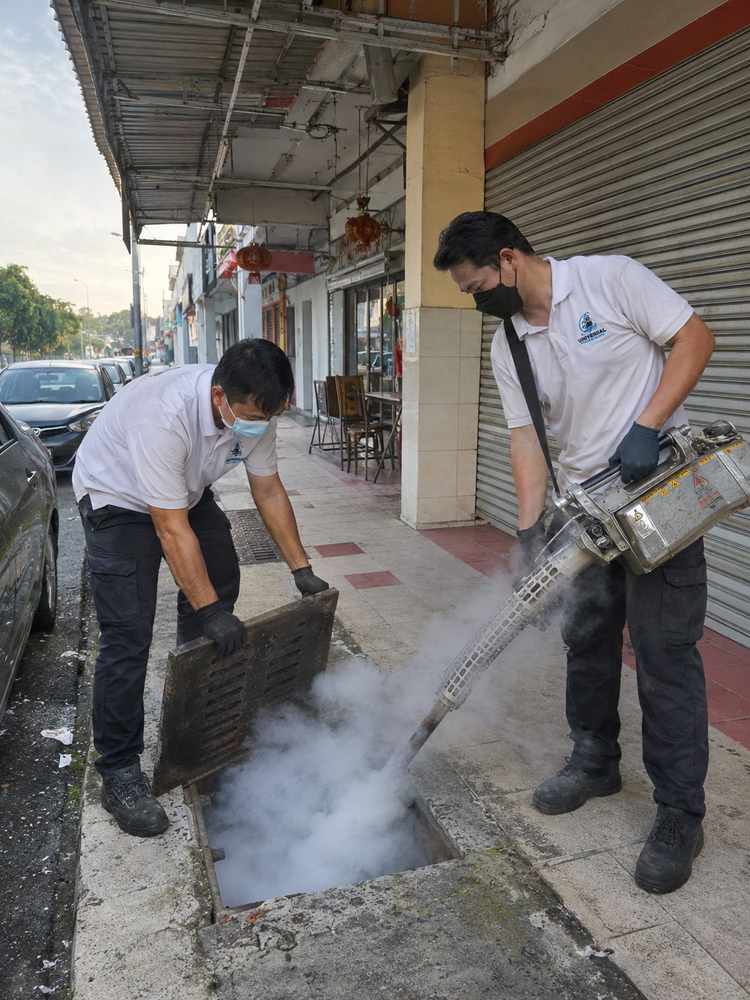
Compound and drain checks
Outdoor areas are checked for standing water, clogged drains, overgrown vegetation and refuse holding points. Reducing mosquito breeding sites around the compound is a key part of the work.
- 4
Termite assessment in timber structures
Older school buildings, door frames, window sills and roof timbers are inspected for signs of termite feeding. Depending on what we find, options for treatment or monitoring may be discussed.
- 5
Scheduling around the school calendar
We plan visits during school holidays, weekends or after hours to minimise disruption. Treatment timing is discussed with the administration so that classrooms and canteens are ready for use when needed.
Working with School Administrators and Parents
School pest control involves more than just treating the problem. Administrators often need to balance prompt action with parent communication, staff concerns and tight budgets. We provide straightforward information after each visit, including what was done, what was found and what to watch for. This helps the school keep a record and answer questions from parents confidently.
For ongoing contracts, we can plan monitoring visits around the academic calendar. Regular checks during term breaks help catch issues before they become visible to students and parents. If a pest sighting is reported mid-term, we can attend and assess without delay. Our reports are written plainly so that non-technical staff can understand the findings and the next steps.
We also link to dedicated pages on specific pests that commonly affect schools, including mosquitoes, rodents and termites. These pages go into more detail about each pest's habits, risks and treatment options. If your school is dealing with a known pest, those pages may help you prepare for our initial conversation.
Educational Premises We Provide Pest Management For
Kindergartens and preschools
Younger children spend time on floors and in play areas, so pest presence is a heightened concern. We focus on low-level areas, mat storage, nappy-change rooms and outdoor play equipment where pests may hide or breed.
Primary and secondary schools
Larger campuses with multiple blocks, canteens, fields and drainage networks need a systematic approach. We look at high-traffic zones, food courts, locker areas, science labs and perimeter drains.
Tuition centres and enrichment centres
These often operate in shophouse units or converted residential properties with shared walls and compact layouts. We check for pests moving between units, false ceiling activity and kitchenette areas.
Private and international school campuses
Sprawling grounds with sports facilities, swimming pools, boarding houses and multiple dining halls create varied pest pressures. Our inspections cover both built structures and landscaped areas.
Our School Pest Control Process
- 1
Enquiry
You send us a WhatsApp message describing what has been noticed and where on the campus. Photos or short videos from your maintenance team can be very helpful at this stage.
- 2
Assessment
We visit the site at a time agreed with the administration. The inspection covers the areas of concern plus surrounding spaces that could be linked to the problem.
- 3
Quotation
After the assessment we prepare a quotation that outlines what work is recommended and why. The document is sent to the relevant decision-maker for approval.
- 4
Treatment
The work is scheduled during a quiet period, such as a term break, weekend or after hours. We brief the site contact on what will happen and how long the work is expected to take.
- 5
Follow-up
We return to check how the treated areas are responding and whether any adjustments are needed. For ongoing contracts, monitoring visits are spaced according to the site's risk level.
The steps depend on the pest and the property. More on our process
What Affects a Commercial Pest Control Quotation
We work out a quotation after the site assessment. The final figure depends on several practical factors.
- Total built-up area and number of blocks
- Number of canteens, kitchens and food preparation points
- Size of outdoor grounds and drainage networks
- Type and extent of pest activity found
- Access limitations within occupied buildings
- Treatment method recommended after assessment
- Whether a one-off service or ongoing contract is needed
- Scheduling constraints such as holiday-only access
Safety and Communication During School Pest Control
We understand that parents and staff will have questions about any pest control work carried out where children learn and play. Before treatment begins, we discuss the precautions that will be put in place with the school administration. This includes which areas will be temporarily out of use and for how long. The school then decides how and when to communicate this to parents and staff.
Any treatment method we recommend is chosen only after looking at the specific pest, the location and who uses the space. Food preparation areas, classrooms and play zones each have different requirements. We give clear preparation instructions before our visit so that the site team knows what to move, cover or clear. Our aim is to carry out the work with as little disruption to the school day as possible.
Pets and animals kept on school grounds, such as rabbits or fish in science corners, should be pointed out during the assessment. We will note their locations and factor that into the treatment plan. All safety steps are discussed with the site contact ahead of time, and we remain available on WhatsApp for any questions that come up before or after the visit.
School Pest Control FAQs
Can treatment be done during school holidays?
How do we explain pest control work to parents?
Do you check for mosquito breeding spots around the school?
What if termites are found in an older building block?
How do you handle rodents in a school canteen?
Will the school need to close during treatment?
Related Commercial Pest Control Services
Get a School Pest Control Quote on WhatsApp
WhatsApp us to get a free quote. We will review the details and advise the next step for your school.